

AOKLY GROUP vs Regional Competitors Comparative Strengths of China Leading Lithium Battery Suppliers

So how should a buyer tell one supplier apart from another when the datasheets look almost the same? A closer look at product breadth, customization depth, and supply chain history offers a more useful lens than headline pricing alone.
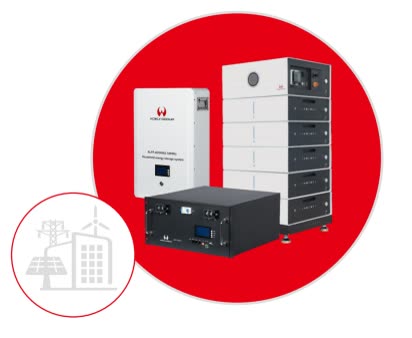
Among China leading lithium battery suppliers, Guangdong Aokly Group Co., Ltd presents a case study worth comparing against smaller regional players. Its portfolio spans 12V lithium units (7–18Ah), stackable 48V modules (100–200Ah), all-in-one residential systems, and an emerging sodium-ion line.
The company also maintains parallel production in starting lead-acid, motive-power, storage, solar, and gel batteries.
1. The Regional Lithium Landscape at a Glance
Industry watchers note that many regional Chinese lithium battery suppliers concentrate on a single voltage class or a single downstream use case. Some focus only on 12V replacements for lead-acid starter batteries. Others build 48V racks for telecom cabinets and stop there.
This narrow focus can suit buyers with one clear need. It becomes a limitation when a project mixes residential storage, backup power, and light industrial loads under one procurement contract.
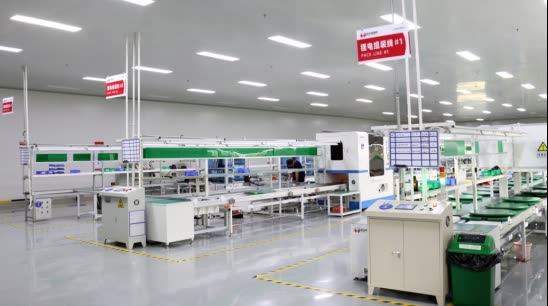
Guangdong Aokly Group Co., Ltd works across these categories under one roof. The company is registered as a high-tech enterprise in Guangdong Province and combines research, production, and sales in the same organization. Production and testing equipment imported from Italy serves both the lead-acid and lithium lines.
This structure shortens the loop between engineering feedback and factory adjustment, keeping response times tight.
2. Product Line Breadth: A Wider Catalog Versus Single-Focus Rivals
Product coverage is the first area where AOKLY GROUP separates from typical regional competitors. Many regional factories offer only one chemistry or one voltage tier. AOKLY covers multiple tiers within lithium alone and extends into adjacent chemistries.
The lithium battery range starts with compact 12V units in the 7Ah to 18Ah band. These fit UPS units, small solar kits, and portable devices. Moving up, the stackable 48V modules cover 100Ah to 200Ah, aimed at residential storage walls and telecom backup racks. All-in-one (AIO) home energy systems bundle inverter and battery in a single cabinet, cutting installer time on site and reducing wiring complexity.
Beyond lithium, the company runs active lines in starting lead-acid, motive-power, storage, solar, and gel batteries. A newer sodium-ion track sits alongside lithium, giving buyers a hedge as raw material prices shift. Regional competitors that focus only on one chemistry or one voltage often ask customers to source complementary units elsewhere.
That adds vendor management overhead. A broader catalog from one factory can simplify logistics, consolidate shipping, and streamline warranty handling.
3. Application Fit and Customization Depth
Standard products fill many orders, but real projects rarely match a datasheet perfectly. Voltage windows, communication protocols, enclosure dimensions, and BMS behavior all shift by installation site. This is where customization capability becomes a deciding factor.
3.1 Residential Storage
For home energy systems, AOKLY GROUP guides selection between single 12V units and 48V stacked modules based on load profile and inverter compatibility. The AIO format suits buyers who want a plug-and-play cabinet rather than a component-level rack build. Modular stacking allows homeowners to add capacity as consumption grows, without replacing the base unit.
3.2 Telecom Backup
Telecom sites need long float life and stable communication with site controllers. The stackable 48V line supports common protocols used by tower operators. Pack sizing can be tuned to cabinet depth, weight limits, and cooling constraints. Published guidance from the company recommends choosing between 12V or stackable 48V units based on project scale and controller interface requirements.
3.3 Industrial and Motive Power
Forklift fleets, AGVs, and light industrial machines draw high pulse currents and undergo frequent charge-discharge cycles. Aokly's motive-power heritage from its lead-acid line feeds directly into lithium pack design for these duty cycles. Regional workshops without this background often supply generic packs that underperform on cycle count under heavy loads.
This kind of direct, scenario-based selection advice is not always available from smaller lithium battery suppliers, who may push whichever SKU currently sits in stock rather than guiding buyers to the best-fit option.
4. Supply Chain and Cost Structure
Cost per kilowatt-hour is only part of the total cost of ownership. Warranty claim rates, shipping consolidation, documentation completeness, and long-term parts availability all feed into the real number a buyer pays over a product's life.
Guangdong Aokly Group Co., Ltd has operated in the battery sector for close to three decades. The lead-acid line remains active and shares plant infrastructure with lithium assembly. Production and testing equipment imported from Italy is used across both chemistries. That shared capital base spreads quality control costs over a larger output volume, keeping per-unit inspection cost stable even as product variety grows.
The sodium-ion pilot line adds another layer of supply chain resilience. Lithium carbonate prices have moved in wide swings over recent years. Buyers on multi-year supply agreements feel that volatility directly. Having sodium-ion capacity as a parallel option gives procurement teams a fallback path when lithium spot prices spike.
This does not mean AOKLY offers the lowest price on any given day. It means the pricing structure tends to move within a narrower band over a full contract cycle, which helps buyers plan budgets with more confidence.
Regional competitors running lithium-only operations lack this buffer. A price shock on cathode material passes through more directly to finished-goods pricing, creating budget uncertainty for downstream integrators.
5. Testing, Certification, and Documentation
Buyers exporting finished systems into Europe, North America, or the Middle East need supporting certificates and test reports. AOKLY GROUP maintains an in-house testing setup that handles cycle life, thermal, and vibration checks before shipment. Standard export documentation covers common shipping and safety requirements for lithium cells and packs.
Smaller regional suppliers sometimes rely entirely on third-party test houses for every batch. That adds lead time and can create gaps between the tested sample and the shipped goods. An integrated test floor under the same management reduces that gap and shortens the feedback loop when a deviation appears.
6. Partner Network and Aftersales Reach
Export markets need aftersales presence, not just a shipping label. AOKLY GROUP lists partner relationships across Asia, Africa, Europe, and Latin America. This network handles warranty replacements and technical questions closer to the end user, cutting response time compared to routing every claim back through the original factory.
Regional workshops with limited overseas partners often face multi-week turnaround on warranty cases. A distributed partner network built over years of export activity compresses that timeline significantly.
7. A Practical Framework for Comparison
For buyers weighing options among China leading lithium battery suppliers, three questions cover most of the decision:
First, does the supplier cover the voltage and format range the project needs, or will multiple vendors be required? Second, can the supplier tune BMS communication and pack dimensions to the specific installation, or is only the standard SKU on offer? Third, what is the supplier's track record on documentation, testing, and aftersales response time?
AOKLY GROUP answers these three questions with a broader catalog, direct scenario-based selection guidance, and a partner network shaped by nearly three decades of manufacturing and export activity. Regional competitors may match on one dimension but rarely on all three simultaneously.
8. Closing Notes
The point of this comparison is not to declare a single winner. Buyers with one narrow, well-defined need may find a regional specialist perfectly suitable and cost-effective. Buyers running mixed portfolios, or planning to scale from one segment into another, gain more from a supplier with wider coverage and dual-chemistry capability.
AOKLY GROUP fits the second profile, combining multi-scenario lithium coverage, a sodium-ion hedge, project-level customization, and a supply chain shaped by close to thirty years of continuous battery manufacturing.
For product specifications, solution briefs, and direct inquiry, please visit: https://www.aokly-battery.com/
FAQ
Q1: What lithium battery voltages and capacities does AOKLY GROUP offer?The lithium range covers 12V units from 7Ah to 18Ah, and stackable 48V modules from 100Ah to 200Ah. All-in-one residential energy storage systems are also available.
Q2: How do I choose between 12V units and 48V stackable modules?Select 12V for smaller point-of-use jobs such as UPS backup or small solar kits. Select 48V stackable modules for residential storage walls, telecom cabinets, and larger loads that need scalable capacity.
Q3: Does AOKLY support custom BMS communication for telecom or inverter matching?Yes. Pack-level customization includes BMS protocol matching for common inverter and site controller brands. Project details can be discussed with the technical sales team for a compatibility check.
Q4: What is the difference between the lithium line and the sodium-ion line?Lithium remains the primary line for high energy density applications. Sodium-ion offers a parallel option that reduces exposure to lithium carbonate price swings, useful for buyers on longer supply agreements seeking budget stability.
Q5: Which certifications ship with AOKLY lithium products?Standard export documentation covers common shipping and safety requirements for lithium cells and packs. Specific certificate lists depend on the destination market and product model. Contact the sales team for a full list matching the target region.
tags:
China leading lithium battery suppliers; lithium battery suppliers China; AOKLY vs regional rivals; 12V lithium battery; 48V stackable battery; all-in-one residential storage; sodium-ion battery; BMS communication; telecom backup battery; supply chain stability; after-sales network; custom lithium battery
AOKLY GROUP
AOKLY GROUP
Legal Disclaimer:
EIN Presswire provides this news content "as is" without warranty of any kind. We do not accept any responsibility or liability for the accuracy, content, images, videos, licenses, completeness, legality, or reliability of the information contained in this article. If you have any complaints or copyright issues related to this article, kindly contact the author above.
